Stay Greek, Stay Fed: The Unwritten Rule of Eating in Santorini
There is a rule in Santorini that nobody writes down but everyone who has eaten badly here eventually discovers, usually halfway through a plate of pasta that has no business existing on a Greek island. The rule is this:
Stay Greek.
Tattoo it on your hand. Write it on a napkin. Repeat it to yourself before every meal like a small, flavourful prayer. The island will try to tempt you sideways — Italian menus propped up outside tavernas, pizza boards in four languages, the false comfort of the familiar. Resist. The moment you defect from the local cuisine, Santorini stops feeding you and starts merely processing you.
I speak from the full evidence of a week's eating.
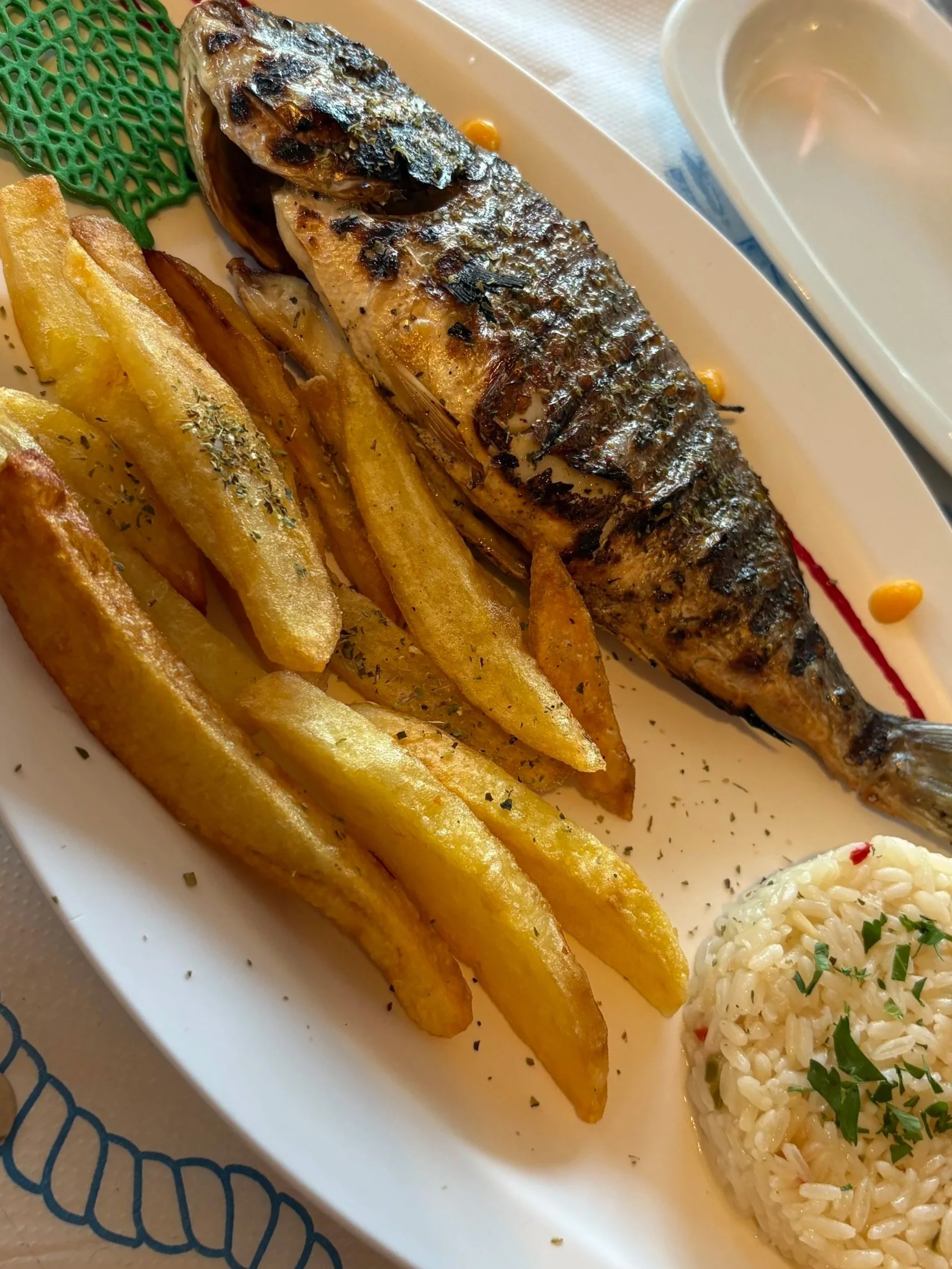
The Greek food here is extraordinary. Not in the way that travel writing calls things extraordinary, as a reflex, as filler — but in the specific, arresting sense that you are on a volcanic island in the Aegean and the fish that arrived on your plate this morning was, with very high probability, in the sea yesterday. Fresh fish on Santorini is not a claim on a menu. It is a fact of geography. You eat it and you understand, perhaps for the first time, what the word fresh is supposed to mean before it became a marketing term.
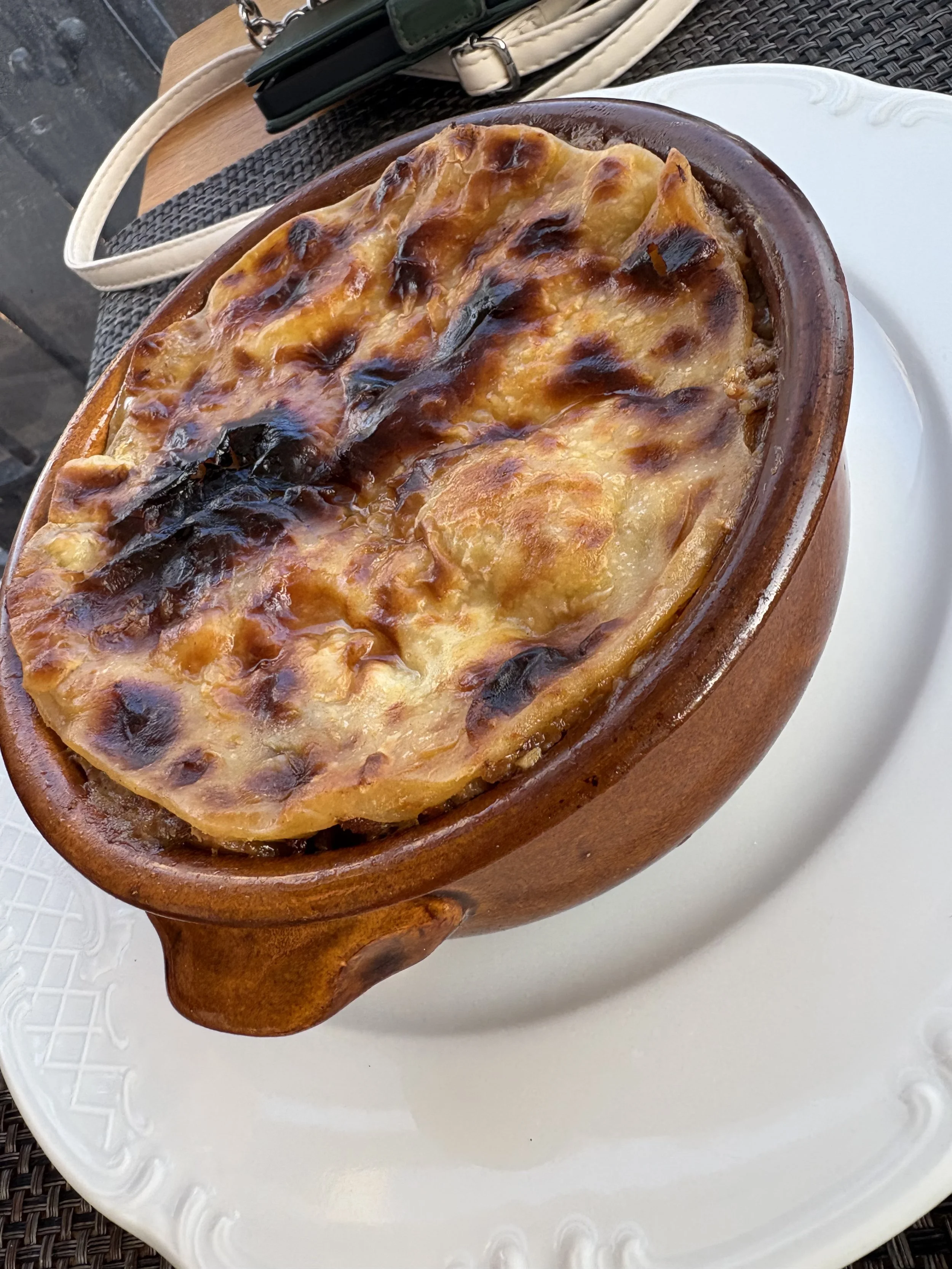
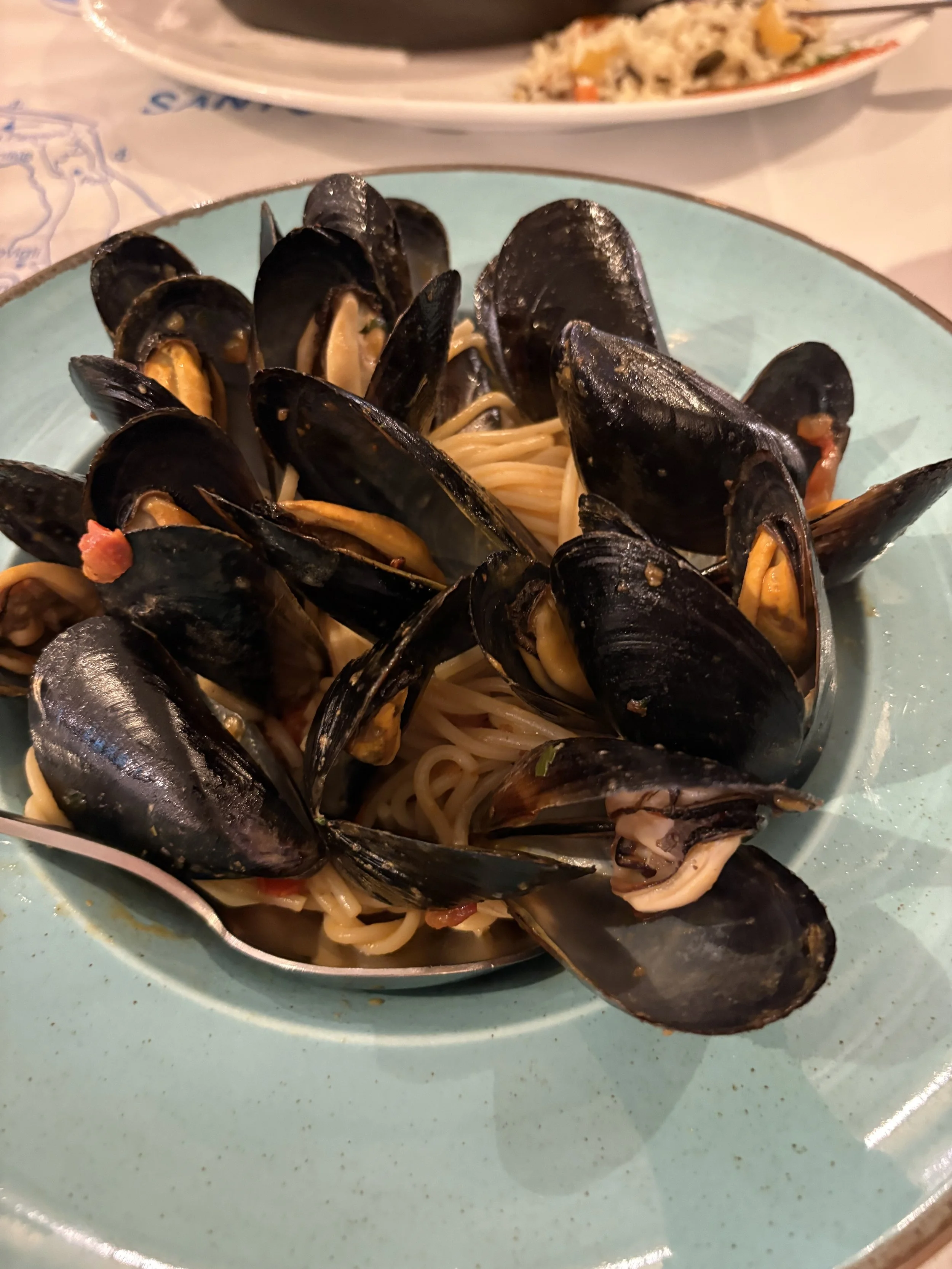
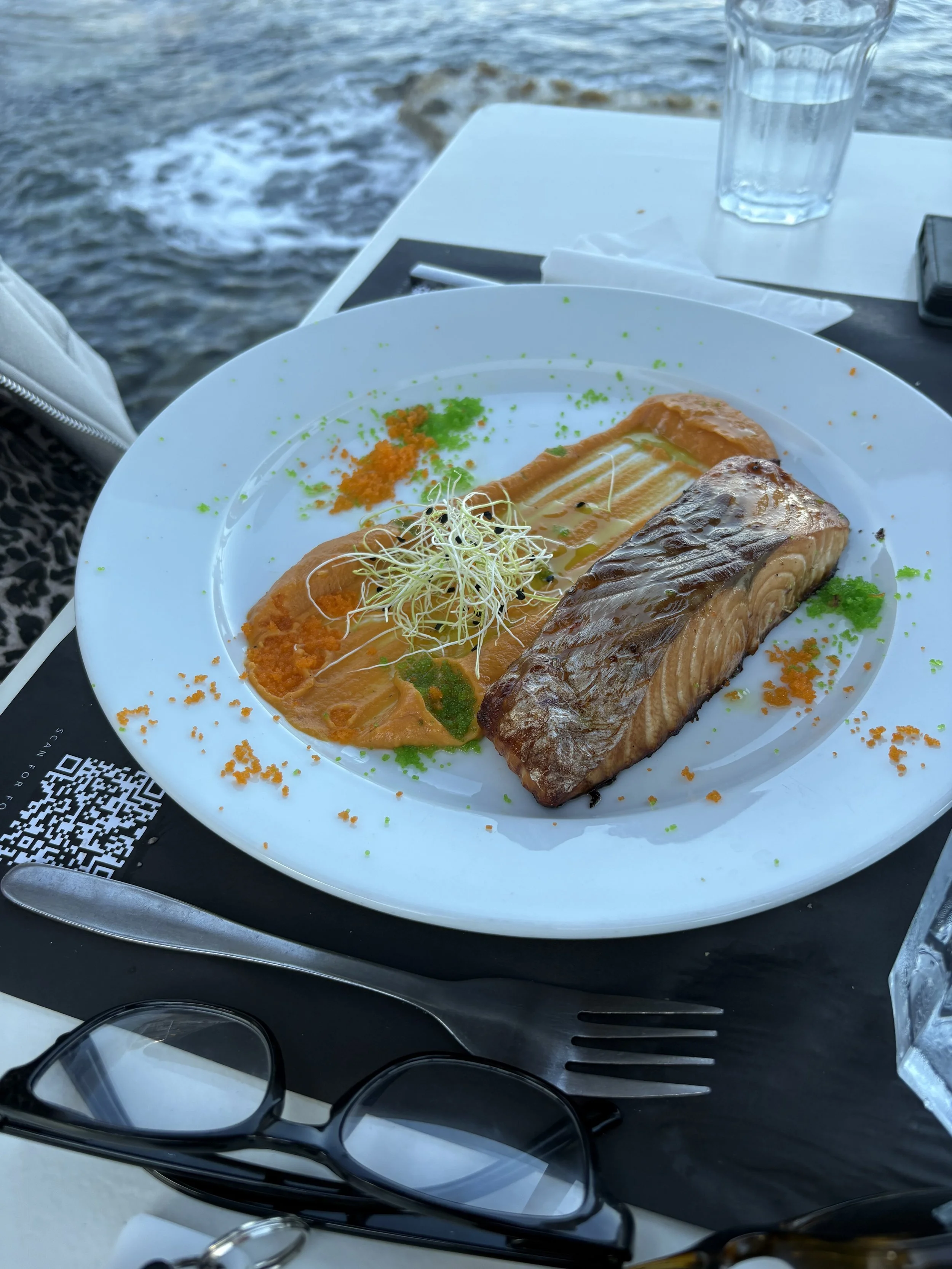
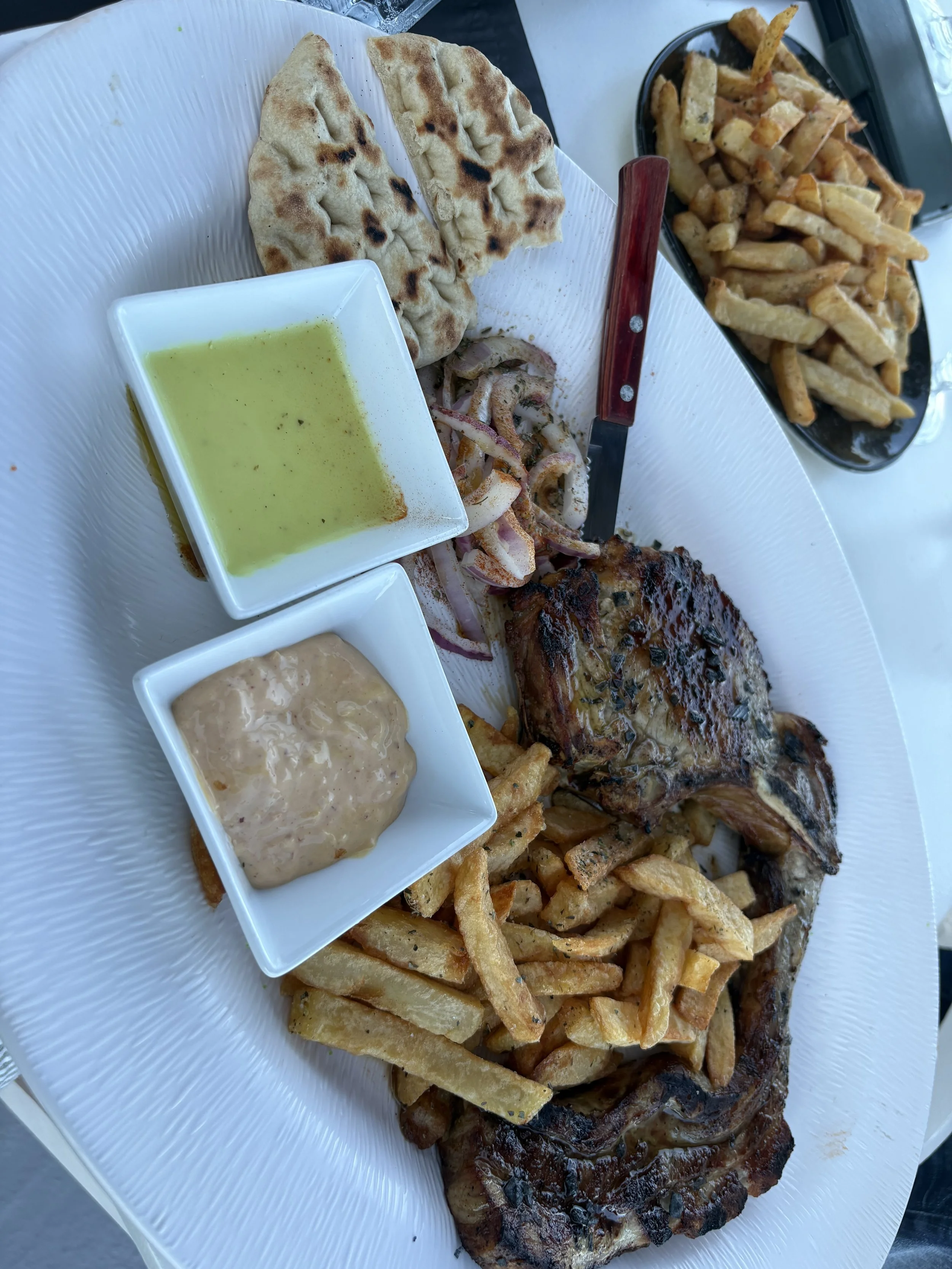
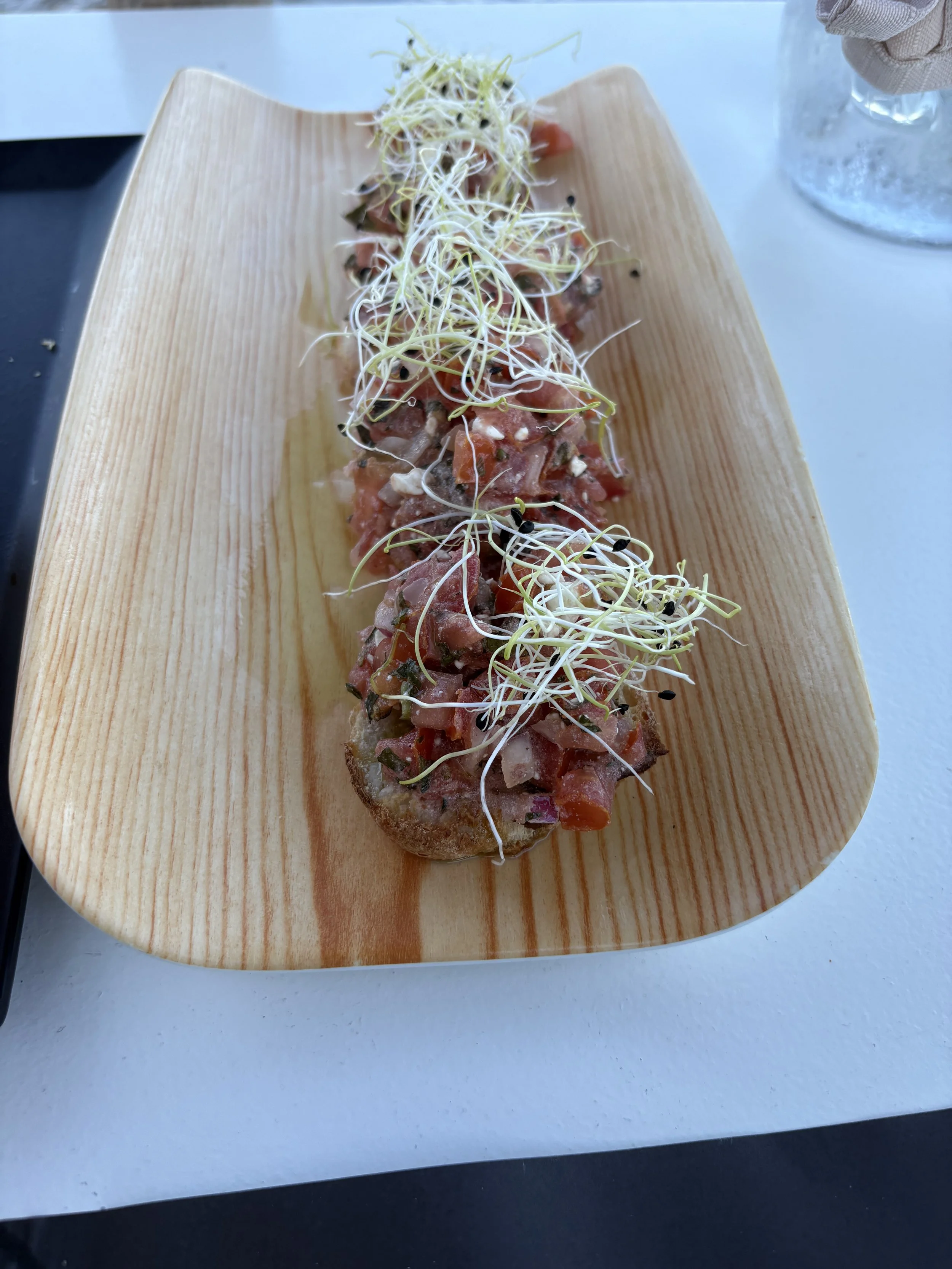
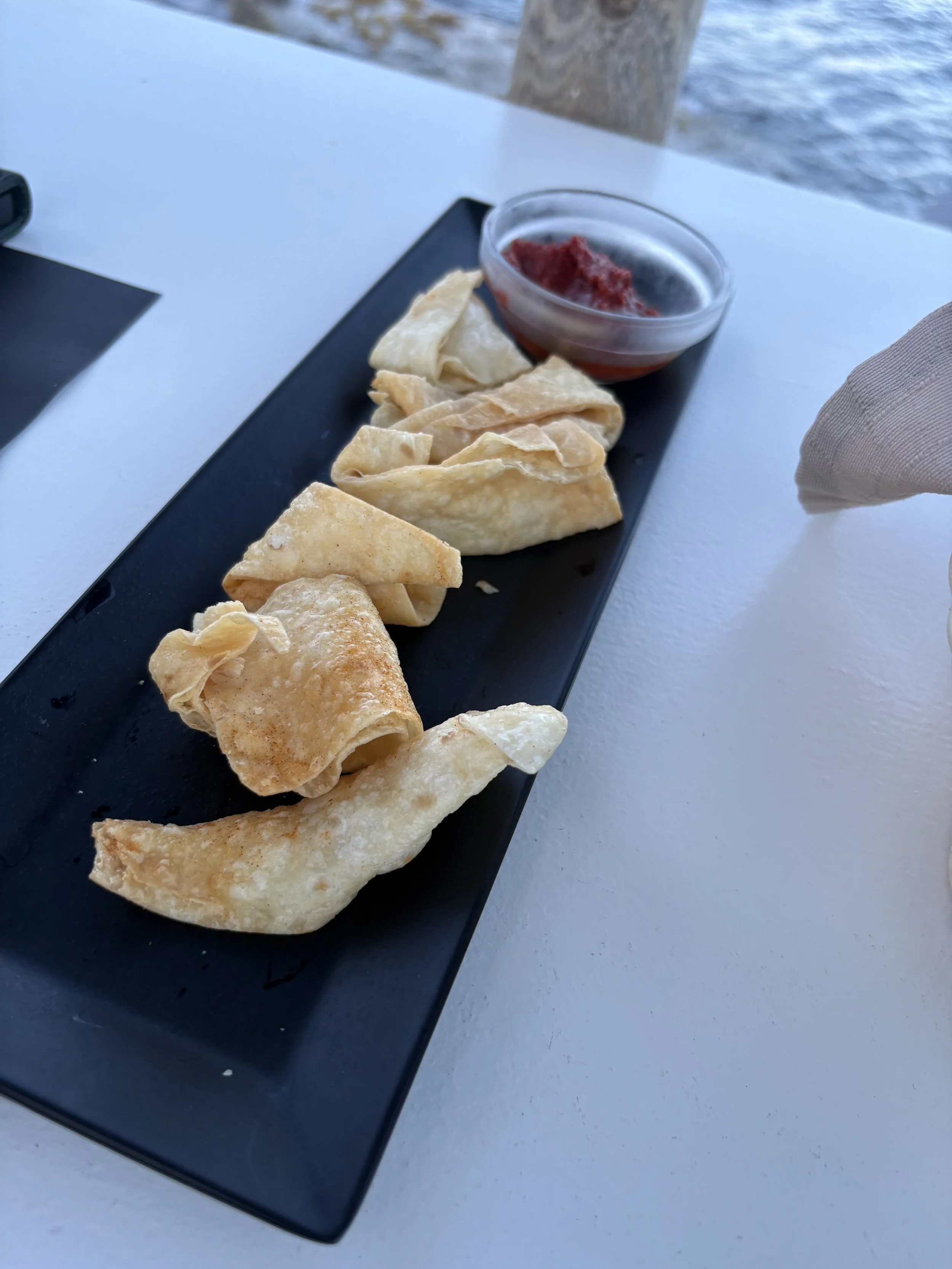
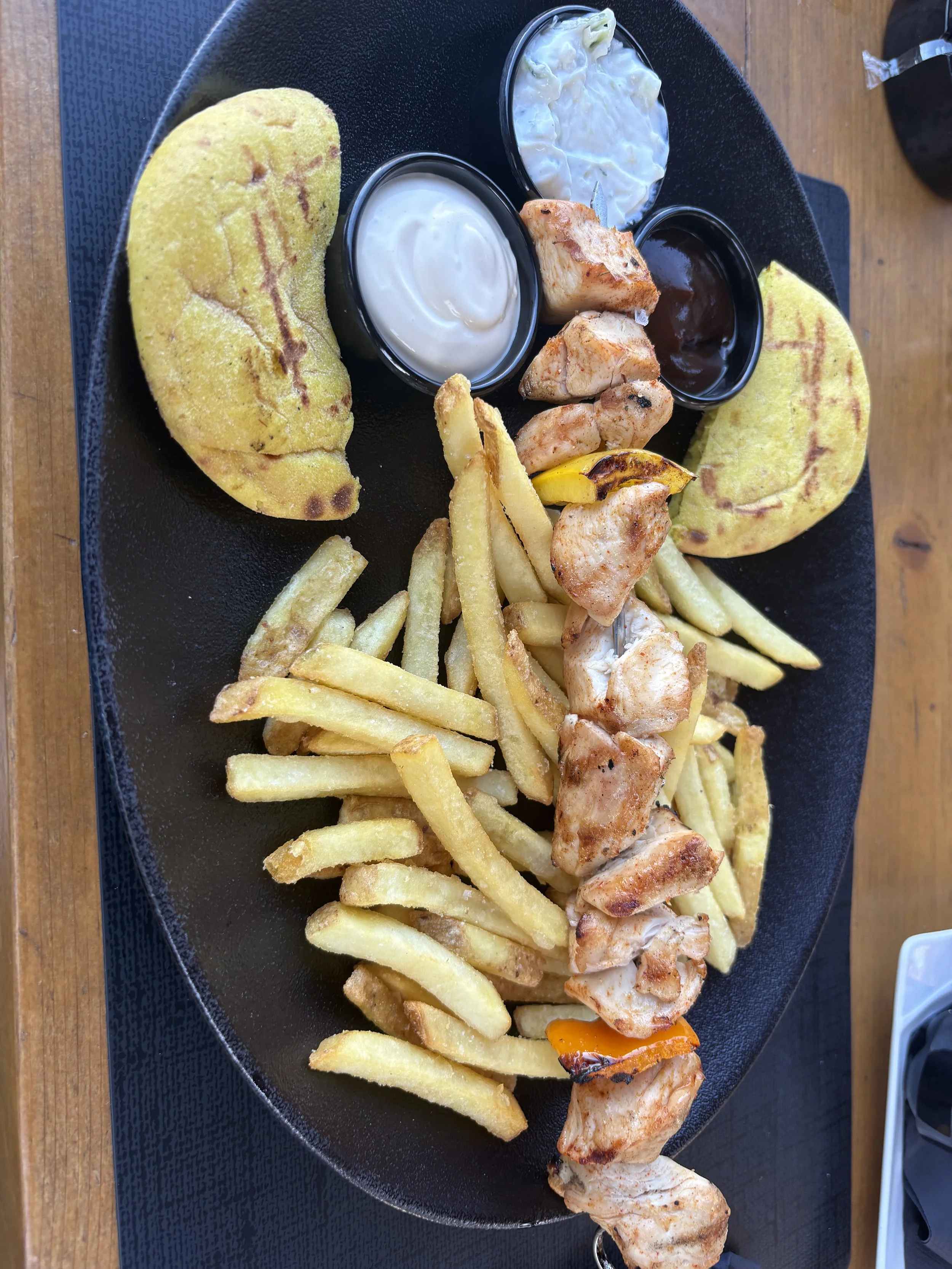
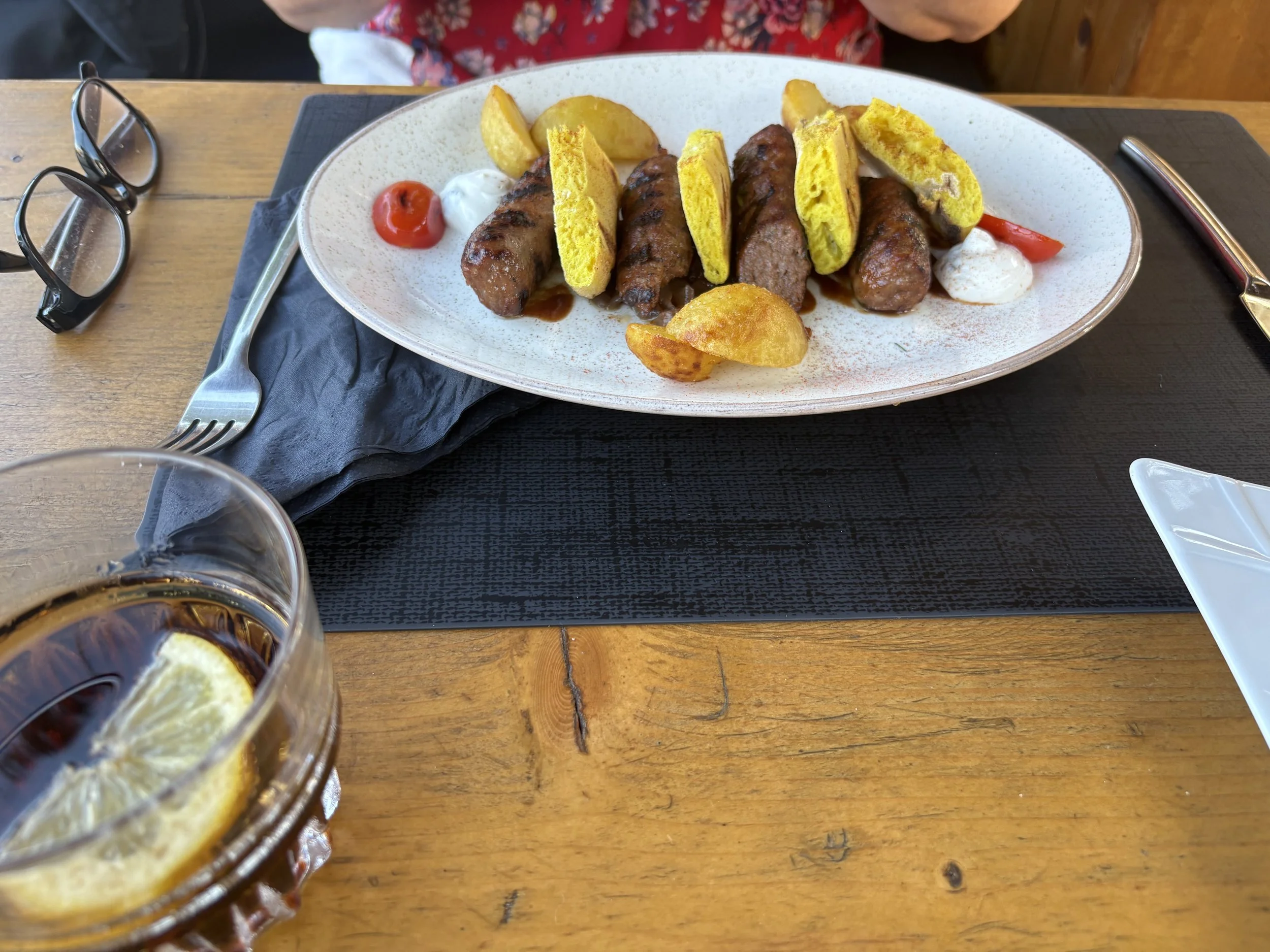
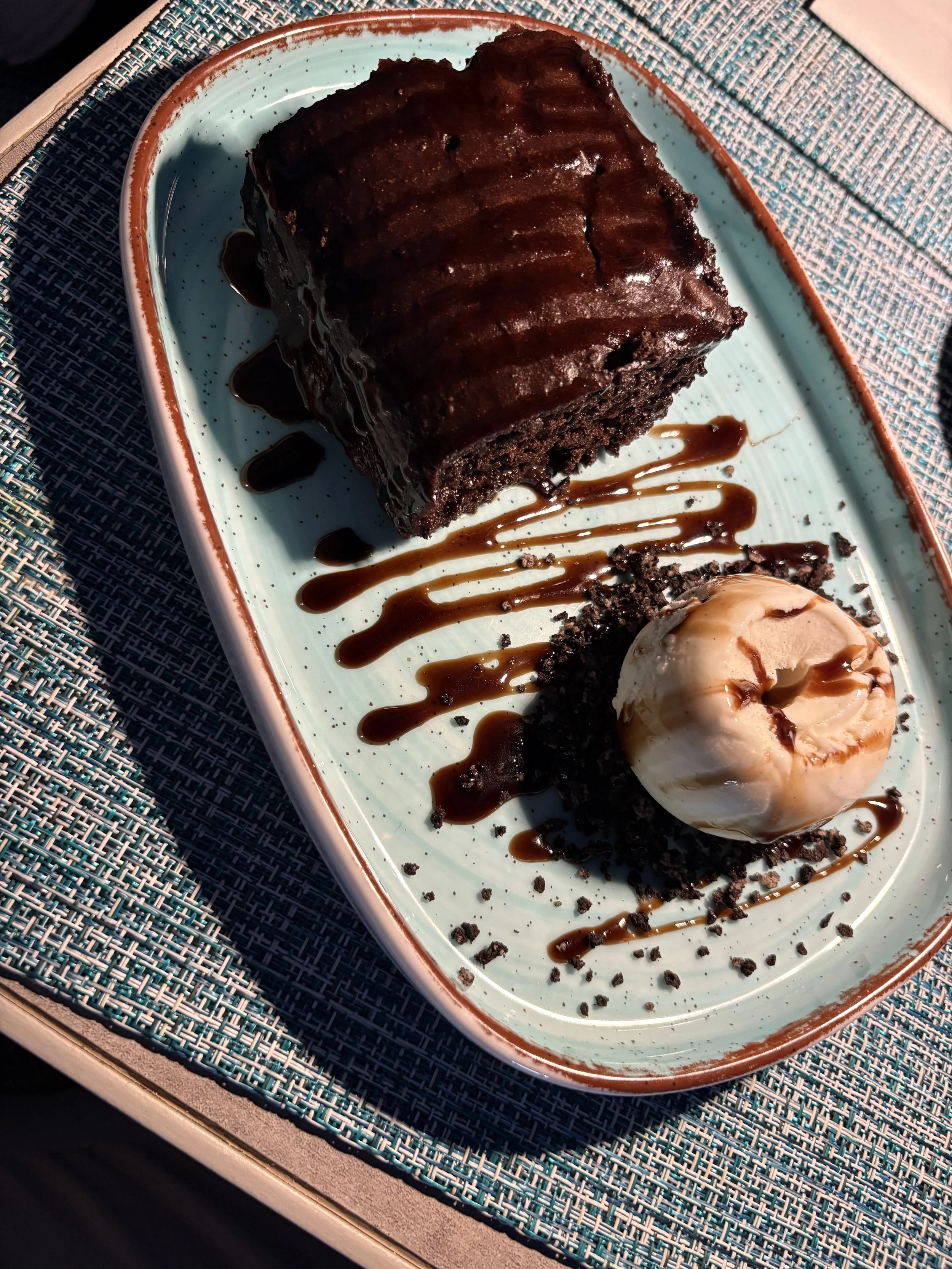
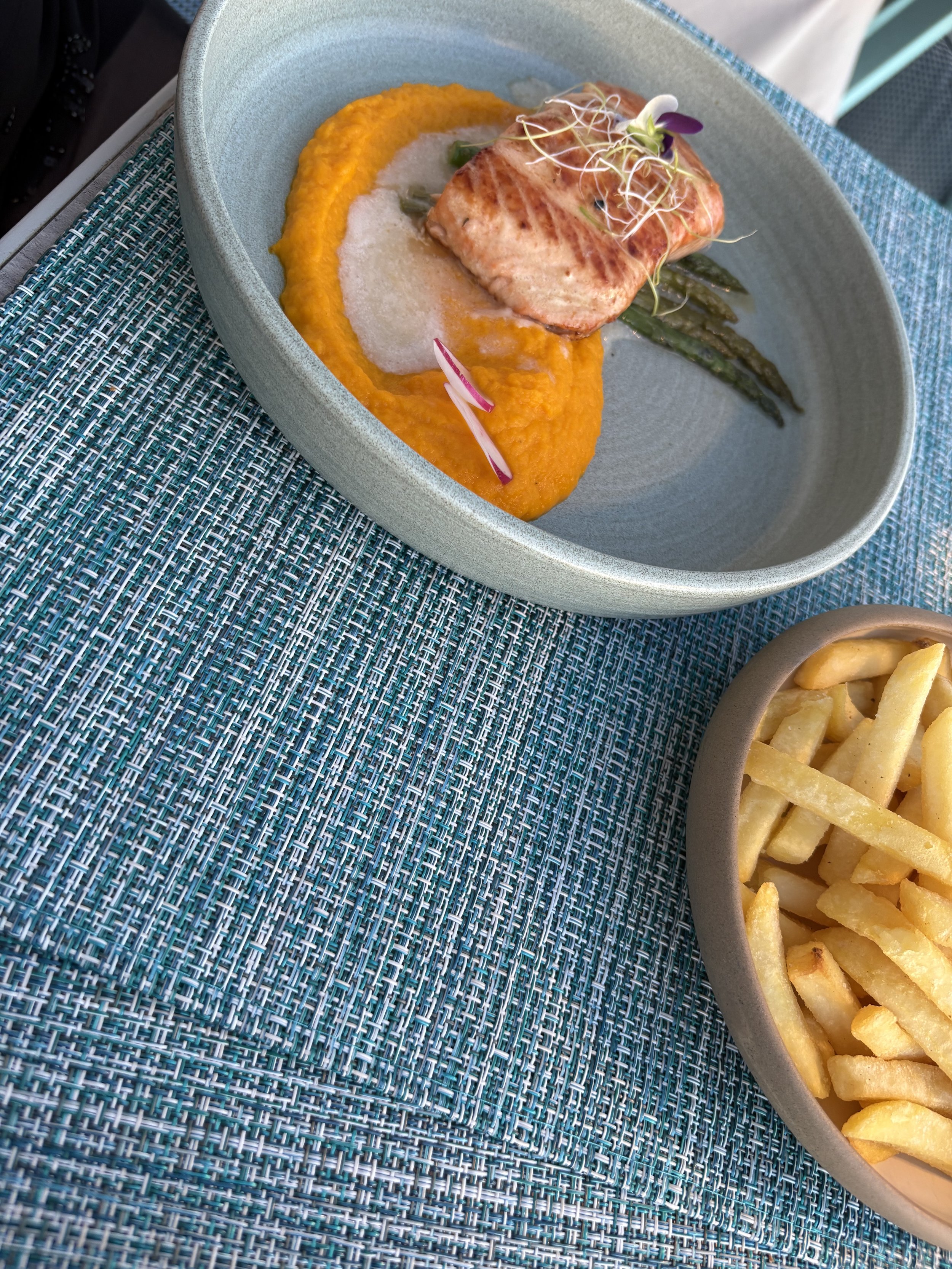
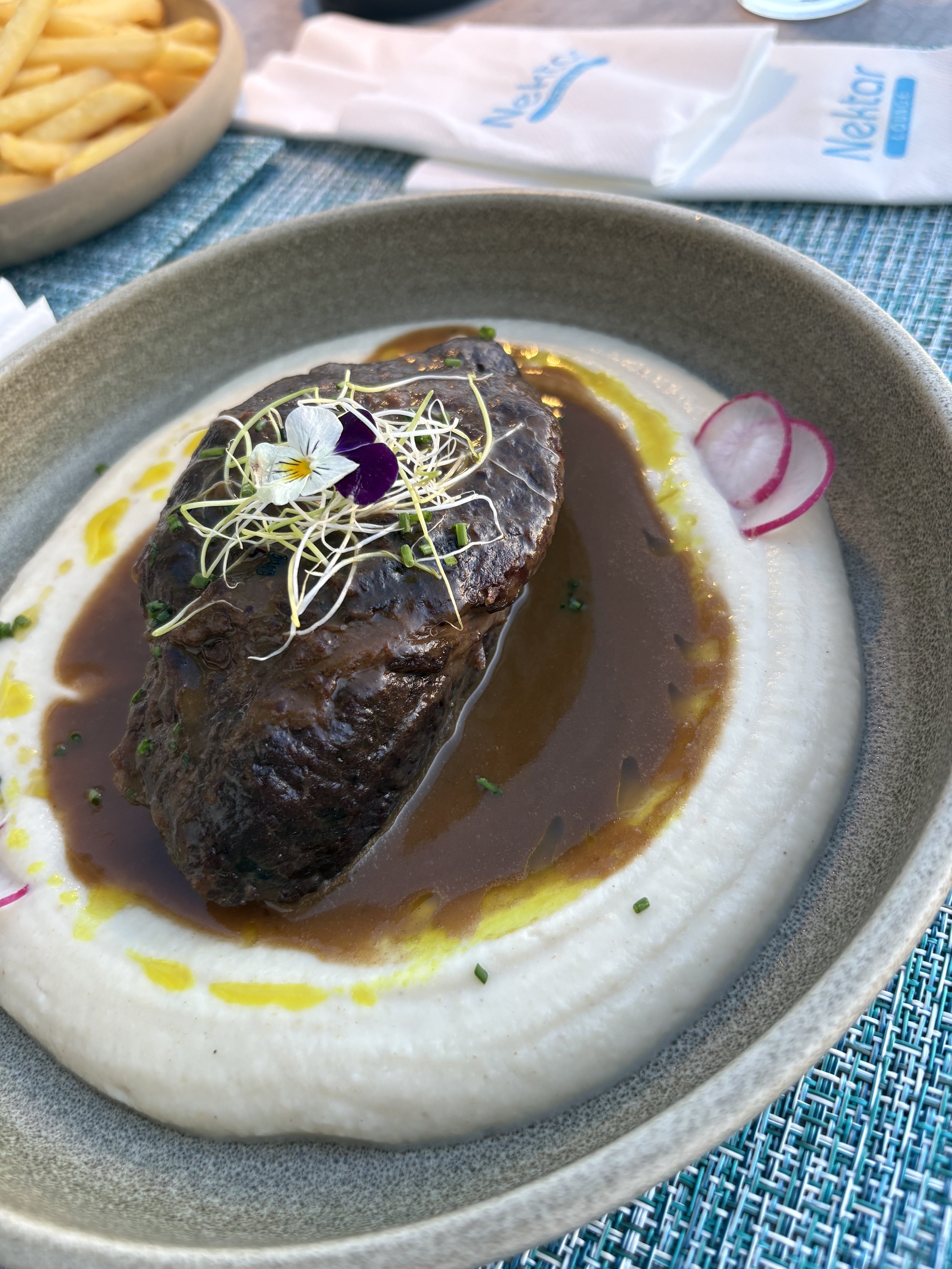
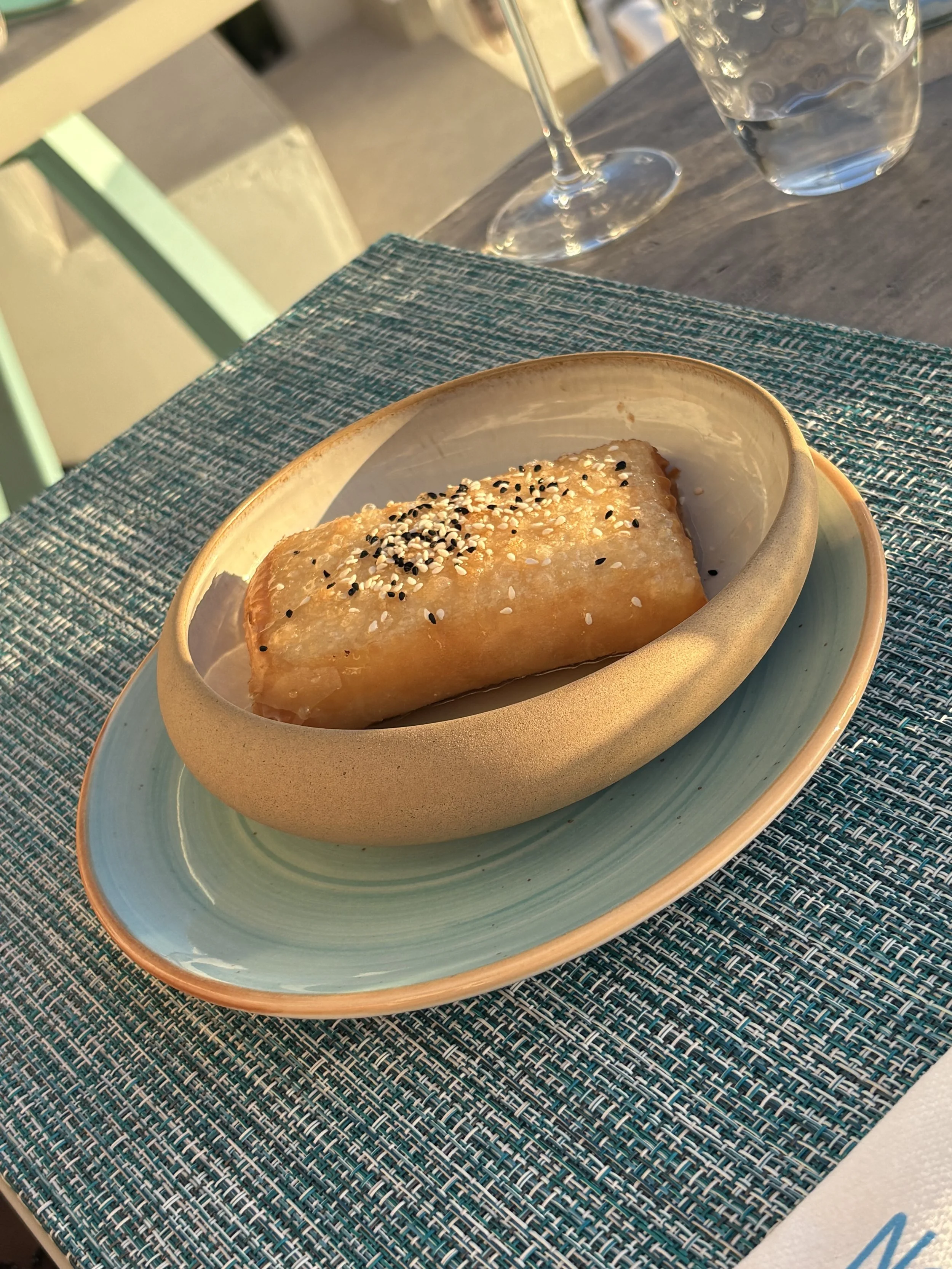
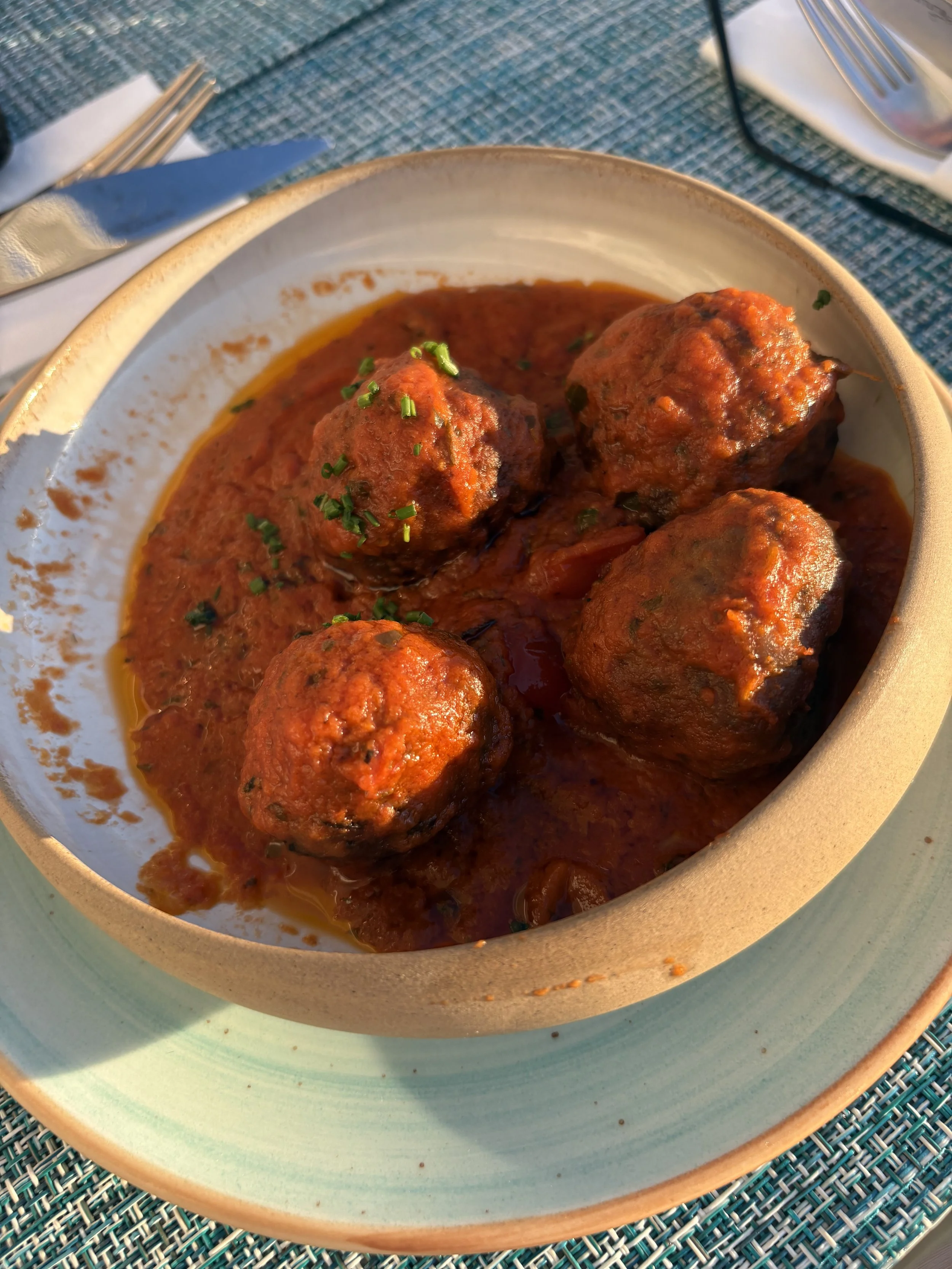
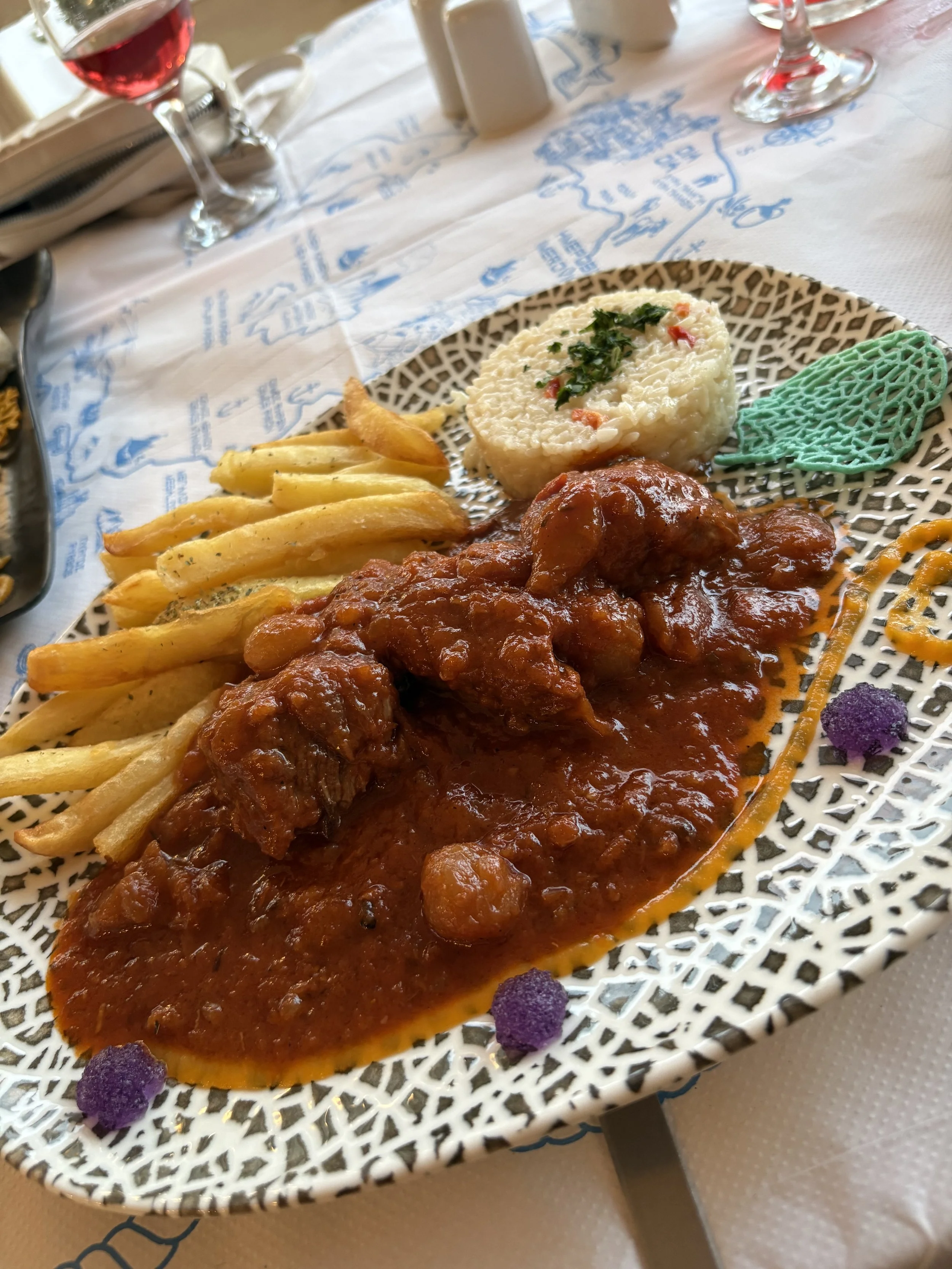
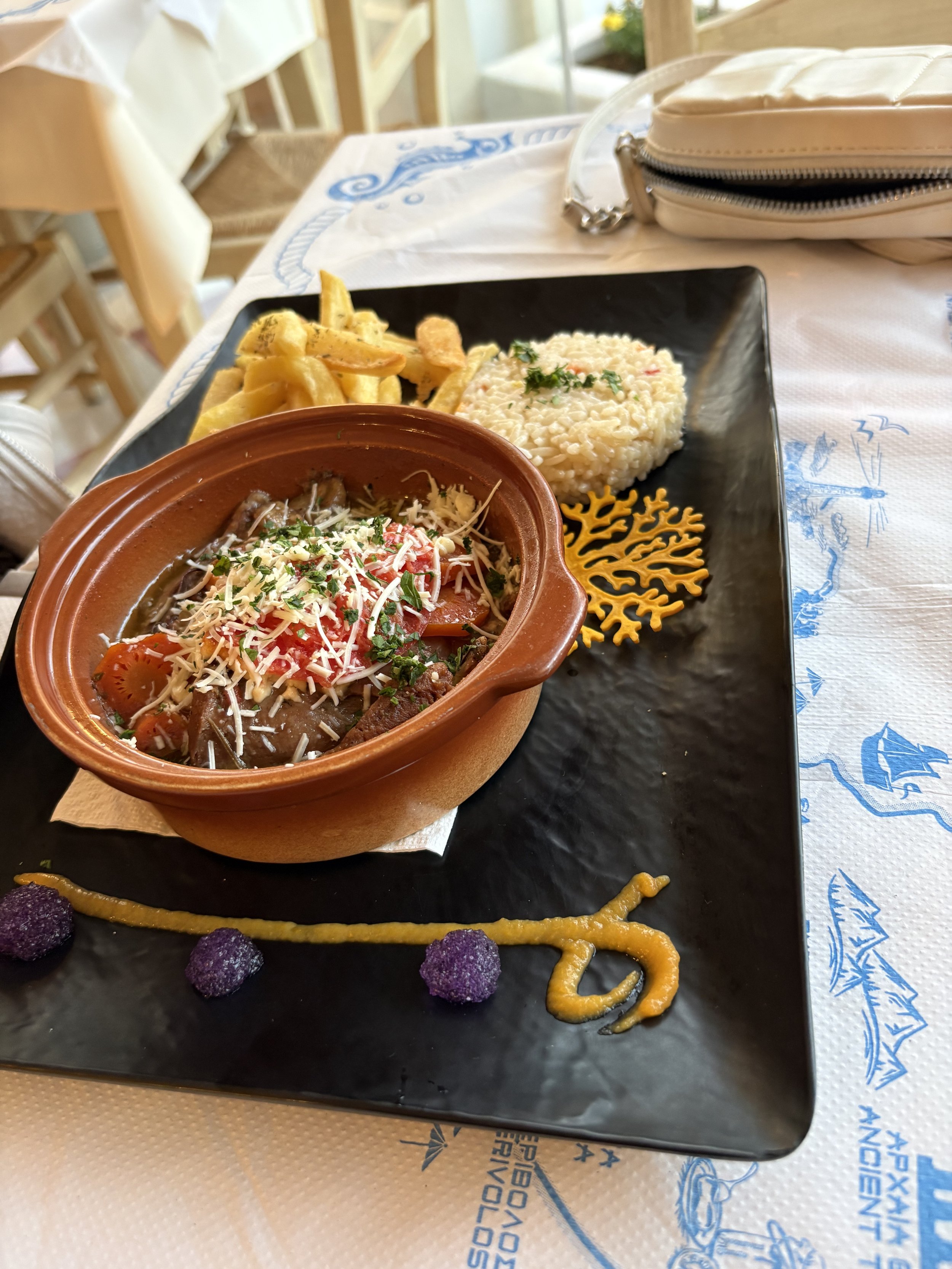
The stifado — the slow-cooked meat stew, sweet with onions and warm with spice — is the kind of dish that justifies the existence of the taverna as an institution. Rich without being heavy. Deep without being complicated. The sort of food that makes you sit back and stop talking for a moment, which is the highest compliment a dish can receive.
And the kleftiko. Lamb slow-cooked in parchment until it surrenders entirely, the flavour gentle and balanced, the meat doing something almost architectural in the way it holds together and then doesn't. You will order it. You will finish it. You will briefly consider ordering it again.
This is what Santorini does when it's being itself.
The Italian food is what happens when it isn't.
I want to be measured here. I want to be fair. I have tried to construct a charitable reading of the pasta dishes I encountered, and what I keep arriving at is: basic. Genuinely, bewilderingly basic. The kind of pasta that exists not because someone wanted to make pasta, but because the menu needed a non-Greek option and pasta seemed manageable.
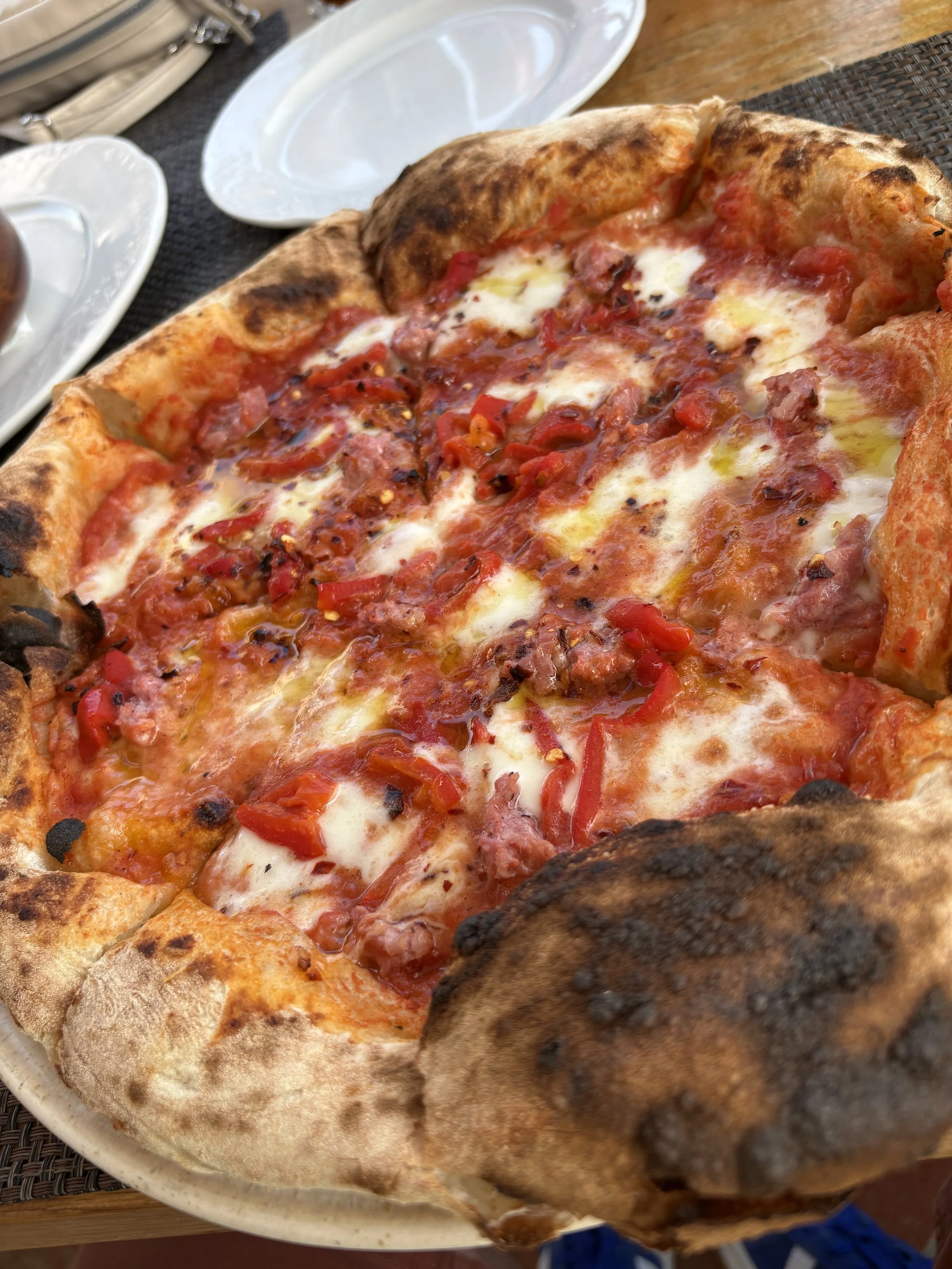
The pizza situation is its own chapter of the same unhappy story. Standard bases that arrive with the specific texture and structural integrity of something that was made elsewhere, at some earlier point, and has been waiting. There is, I should note, a wood-fired option in places — seek it out, because the base quality improves considerably — but even then, the toppings can betray you.
The ham pizza deserves its own paragraph, as a warning. What arrives is not pizza in any meaningful culinary sense. It is a pre-made base covered, with apparent enthusiasm, in what can only be described as packet sandwich ham. Slabs of it. The kind of ham that comes in a plastic wrapper from a supermarket refrigerator. On a pizza. In Santorini. With the Aegean outside the window. I have considered this at length and I cannot explain it.
Eat Greek. Please. For your own sake.
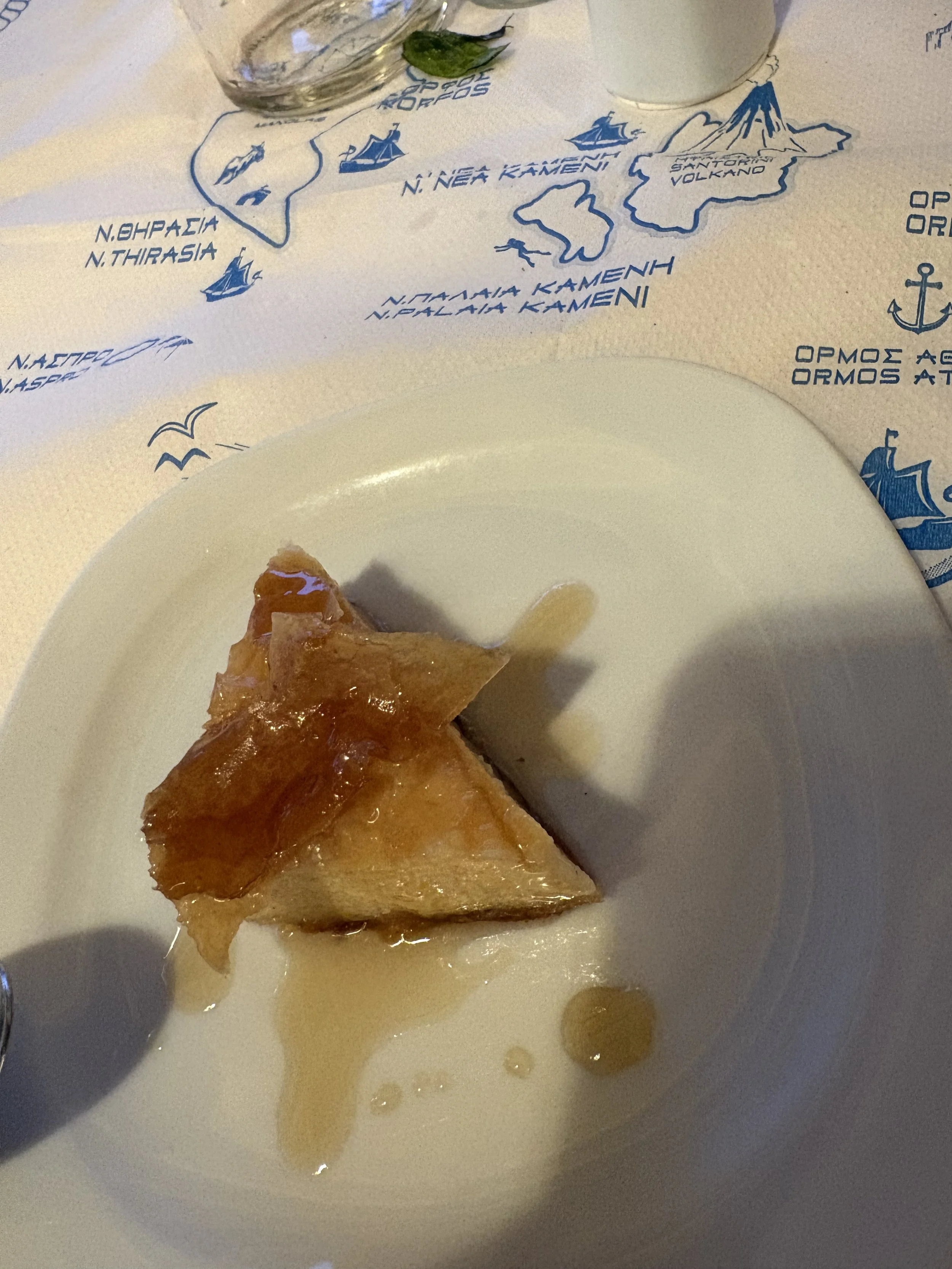
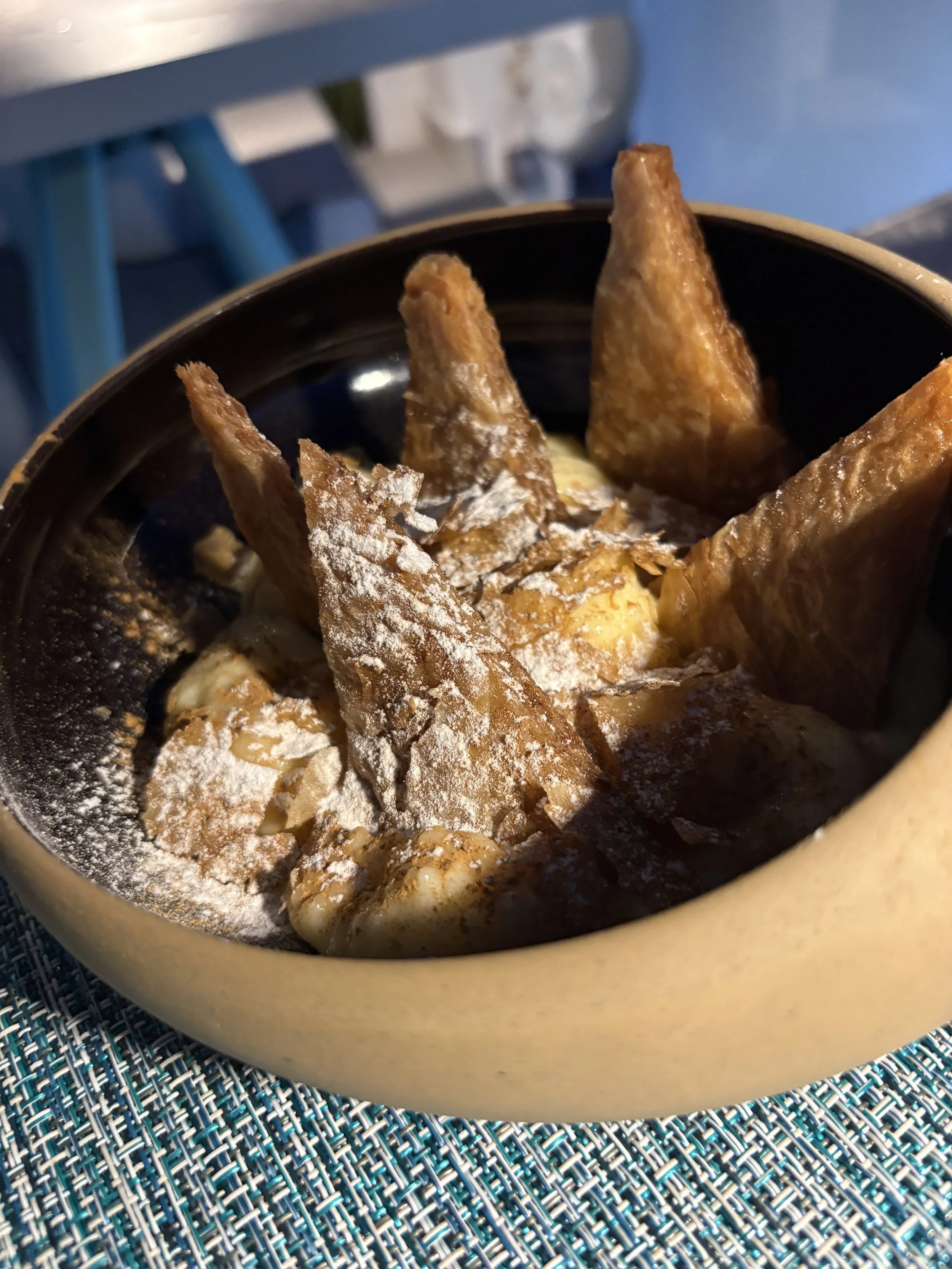
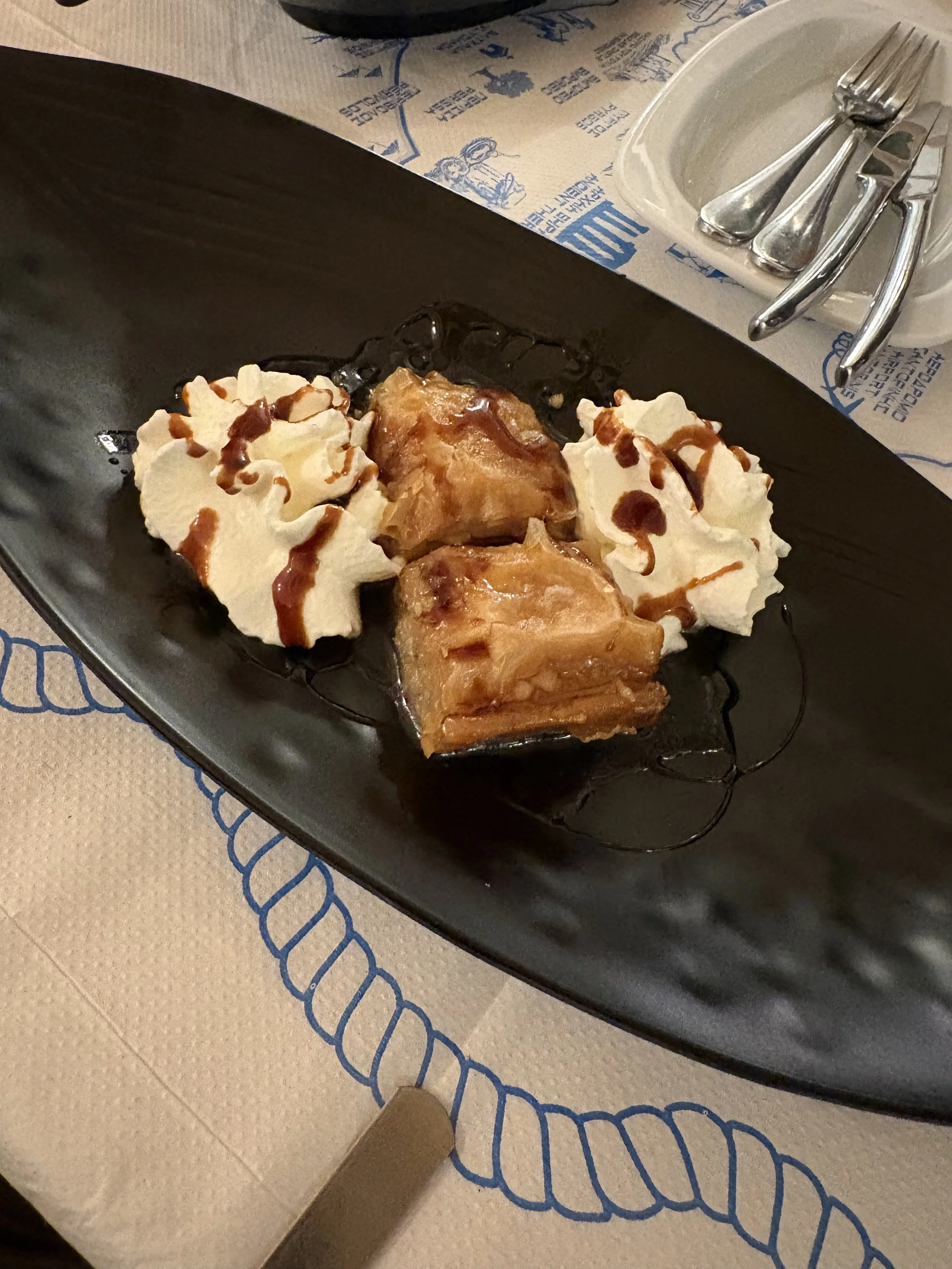
Desserts are not where Santorini makes its case.
Simple is the word. Functional. They exist at the end of a meal the way punctuation exists at the end of a sentence — necessary, unremarkable, soon forgotten. If you arrive expecting the dessert to be the moment of the evening, recalibrate expectations before the main course arrives.
The local wines, however, are a genuine and pleasant surprise. Volcanic soil produces something distinctive — the Assyrtiko grape in particular delivers a dry, mineral white that works with the fish, with the heat, with the general project of sitting somewhere beautiful and not wanting the afternoon to end. Drinkable is underselling it slightly. Recommendable is more accurate.
Now. The prices.
The view premium on Santorini is real, established, and non-negotiable. Any table from which you can see the caldera, the sea, the sunset, or anything worth photographing has already added this to your bill before you sat down. You are not paying for the food alone. You are paying for the angle. As discussed elsewhere on this blog, the island is entirely transparent about this arrangement, which almost makes it acceptable.
What is harder to accept is that value — genuine, family-sized, everyone-eats-well-without-a-financial-incident value — can be elusive. Not impossible. But you will work for it. The budget calculation for a family eating out here daily is a serious conversation to have before you arrive, not during the third dinner when you're examining the bill with the expression of a person doing mathematics they don't like.
The strategy, if you're keeping score: find the tavernas away from the famous viewpoints, order Greek, drink local wine, skip the pizza entirely, and treat the one caldera-view dinner as the event it's priced to be rather than the default.